Why Art Therapy Can Be Transformative for Queer People with Eating Disorders
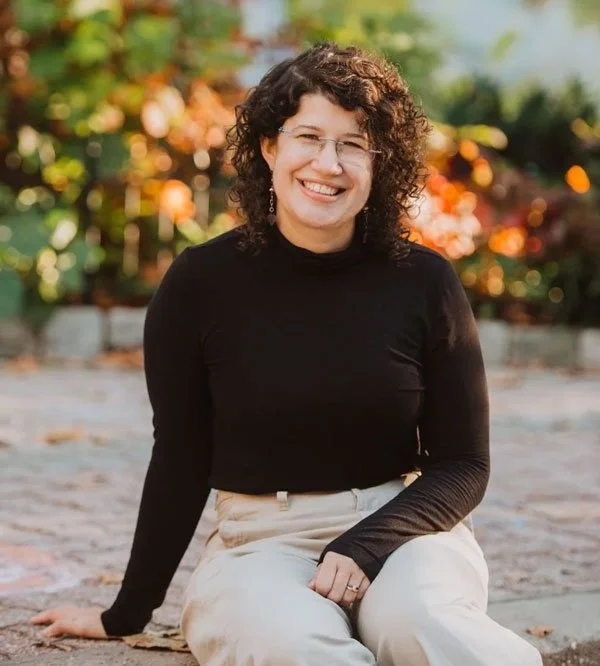
Guest Blogger: Christine Ruberti-Bruning ATR-BC, CEDS, LPC
(She/Her) Certified Eating Disorder Specialist and Art Therapist at Ruberti Counseling
Eating disorders are one of the most misunderstood mental health conditions, with serious impacts that continue to be minimized in our diet-obsessed society.
Since 2000, the worldwide prevalence of eating disorders has more than doubled, and in the United States, health visits for eating disorders in adolescents rose 107.4% from 2018 to 2022 (Pastore et al., 2023). Eating disorders can also have serious complications. Anorexia nervosa is one of the most lethal psychiatric issues, second only to opioid use disorders, and is linked to medical complications and elevated suicide risk (van Eaden et al., 2021) Malnourishment can lead to bone loss, infertility, and heart failure. However, eating disorders continue to fly under the radar because these behaviors are viewed as healthy by our society.
Diet culture normalizes restrictive eating and equates intentional weight loss with health. Many folks, especially those who are not thin, white, cisgender, don’t get screened for an eating disorder. Folks in larger bodies are often told to lose weight without consideration for their relationship with food and eating disorder history. Never mind that research shows that diets don’t work long term, and that weight cycling has negative impacts on heart and metabolic health.
As an eating disorder therapist in Philadelphia, I’m especially concerned with the resurgence of ‘skinny culture’ at the cost of one’s physical and mental wellbeing. Especially for folks whose bodies and identity are deemed as less worthy in our society.
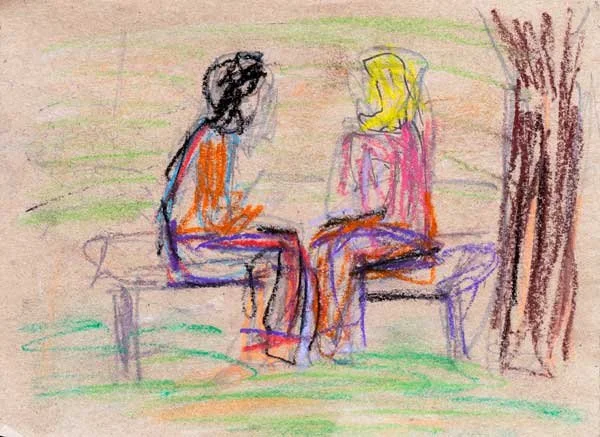
You don’t need to be “good at art” or an artist to benefit from art therapy.
LGBTQ individuals are among the most vulnerable to eating disorders due to discrimination and minority stress. According to a National Survey in 2018, 54% of LGBTQ youth reported having an eating disorder compared to their straight peers with 58% of those respondents’ experiencing suicidality (The Trevor Project & National Eating Disorders Association, 2018.) Research indicates that 20-50% of transgender and gender expansive adults report engaging in disordered eating.
In the United States, health visits for eating disorders in adolescents rose 107.4% from 2018 to 2022
While eating disorders affect people of all identities, they hit different for queer and trans people. Discrimination can cause queer and trans people to feel shame about their identity and bodies, and disordered eating can be a way to manage those feelings. Some trans people experience gender dysphoria, and controlling their food intake is a way for their body to feel more aligned with their gender.
Traditional recovery narratives may be invalidating to LGBTQ individuals, leaving queer people feeling misunderstood and alienated in treatment. Some eating disorder recovery goals can be all or nothing, with an emphasis on loving your body as the ultimate solution. Body positivity may not feel attainable for some people and lacks nuance in the relationship between body image, identity, and gender.
54% of LGBTQ youth reported having an eating disorder compared to their straight peers, with 58% of those respondents’ experiencing suicidality.
(The Trevor Project & National Eating Disorders Association, 2018.)
Talk therapy and CBT methods have robust evidence of their effectiveness in eating disorder treatment, but they are not helpful for everyone. For some folks, CBT combined with other methods is helpful, while other people benefit from a different approach altogether. The shame that someone feels behind their eating disorder can make it hard to talk about it, leading to emotional overwhelm and shutting down. Some people downplay their eating disorder which can make talk therapy difficult to engage in.
Eating Disorders as Coping, Not Failure
Eating disorders are often a way to feel a sense of control while navigating a transphobic and oppressive world. Queer people are uniquely impacted by the societal pressures to look a certain way. Even queer spaces have their own unspoken expectations around bodies and gender expression. The thin, white non-binary person that is perpetuated in media can alienate some gender expansive people who don’t fit that mold. Some transgender people may feel compelled to control their food intake to “pass” as cisgender to feel safe in the community.
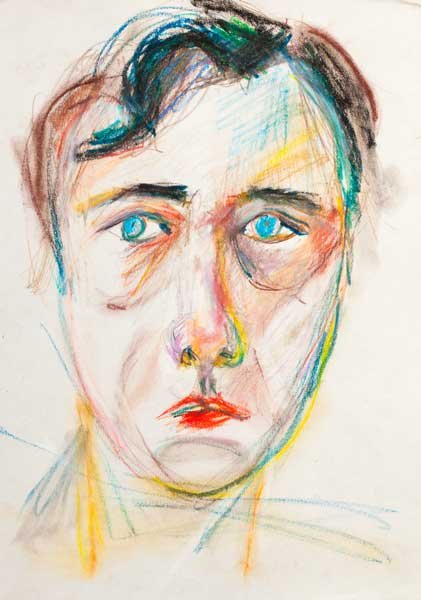
Some trans people experience gender dysphoria, and controlling their food intake is a way for their body to feel more aligned with their gender.
Disordered eating is a survival tactic for many queer and trans folks and can sometimes feel like the only option. This can lead to feeling ambivalent towards recovery because while they are tired of living this way, letting go of their ED feels terrifying and unsafe. However, eating disorders come with a huge cost to mental and emotional wellbeing. The constant thinking about food, tracking calories, and scale checks is exhausting and unsustainable.
Research indicates that 20-50% of transgender and gender expansive adults report engaging in disordered eating.
What Is Art Therapy?
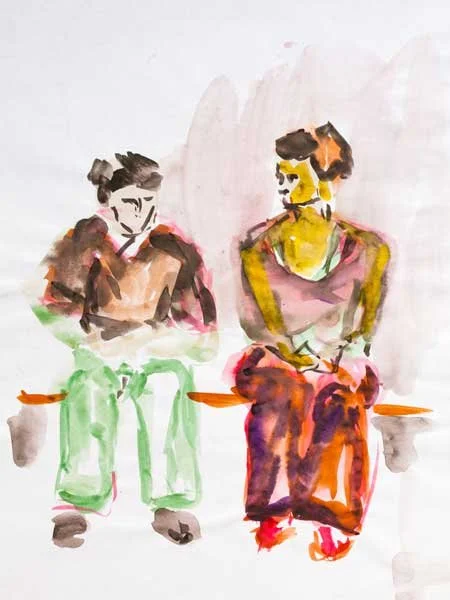
Art therapy is a form of counseling that uses creative expression to help you explore your emotions, process experiences, and understand yourself in new ways. Sessions involve making artwork with the support of a trained art therapist through drawing, painting, sculpture, and collage. You don’t need to be “good at art” or an artist to benefit from art therapy. The goal isn’t to make something that is gallery-worthy but focuses more on how the artistic process connects to your therapy goals.
Why Art Therapy Can Be Especially Helpful for Queer People with Eating Disorders
Expression Without Explanation
Art therapy is a naturally queer-affirming therapy framework because of its ability to help someone explore multiple feelings and identities all at once. The fluid and open-ended nature of creative expression can meet you where you’re at and hold space for all the layers of your unique self.
For queer people navigating eating disorders and body image, art therapy can feel like a safer, more embodied way to process feelings that might feel too overwhelming to say out loud. It creates room for expression that isn’t about performance and helps you connect with your true self. Many queer and trans folks are pressured to justify their existence and over-explain their identities. Art therapy offers a compassionate space for every part of you to exist simultaneously without needing a to “fix” anything.
This process can include ongoing consent and check-ins, so you have complete control of the pacing of the sessions.
2. Rebuilding Agency and Choice
Eating disorders thrive on rigidity and control through food rules and strict exercise routines. Art therapy helps you let go of perfectionist tendencies in a safe, supportive environment. It gently challenges these rules through encouraging choice of art materials and helping people develop more flexibility in the artistic process. I will sometimes begin art therapy sessions with structured art materials like collage, and help folks gradually move towards less structured art materials like paint. This process can help build frustration-tolerance and self-compassion.
Art Therapy as a Trauma-Informed Approach
Navigating oppressive systems and dealing with discrimination can cause trauma for some queer and transgender folks. Art therapy is a naturally collaborative process, which allows ongoing conversations between you and your art therapist on what works for you. This process can include ongoing consent and check-ins, so you have complete control of the pacing of the sessions.
Art therapy helps calm your nervous system by engaging your senses through the feeling of clay, the sound of pencils hitting the paper, and the smell of crayons. Research shows that engaging in sensory activities can be grounding and help alleviate anxiety. Art therapy can help you develop tools to calm your body both in and out of the therapy session.
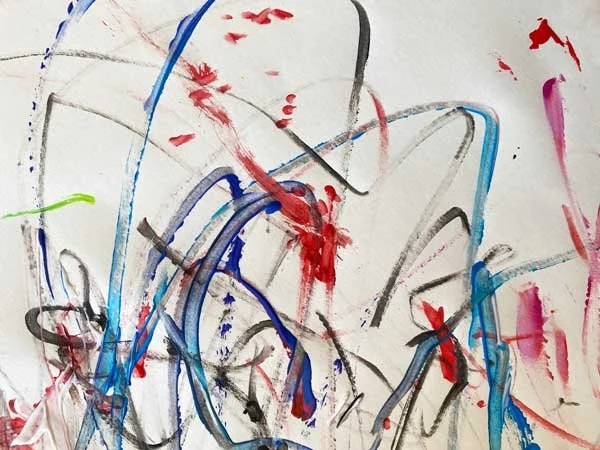
Research shows that engaging in sensory activities can be grounding and help alleviate anxiety.
Talking about trauma stories can work for some people but can be too emotionally activating for some folks. Some traumatic memories are hard to access through talking alone because these experiences are stored in pre-verbal parts of the brain. The artistic process directly accesses these parts of the brain, and helps you process trauma without needing to remember every aspect of the event.
Art Therapy in Early Eating Disorder Treatment
Malnourishment has many negative impacts on the brain including anxiety, memory loss, impaired decision-making, and mind-body disconnect. Emerging research shows that the creative process can help someone experience therapeutic benefits even while being malnourished from an eating disorder. Artmaking can help a malnourished person reduce anxiety and support decision-making in ways talk therapy may not be able to. Specific art materials and prompts can be selected throughout sessions to help you organize your brain and build tolerance for uncertainty. (Eileen Misluk-Gervase, 2021.) This makes art therapy a promising approach for folks early in eating disorder treatment who are still in the process of medical stabilization.
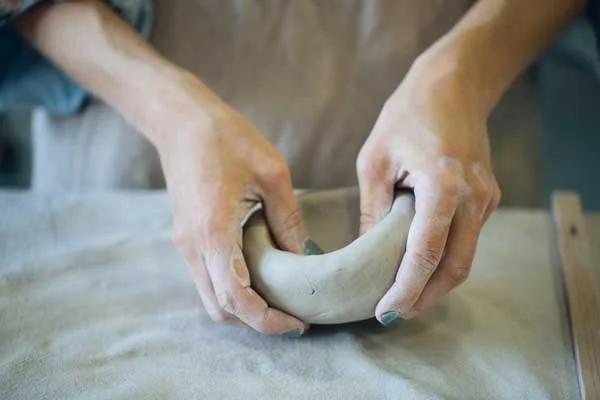
Art therapy helps calm your nervous system by engaging your senses through the feeling of clay, the sound of pencils hitting the paper, and the smell of crayons.
What Art Therapy Might Look Like in Practice
Art therapy is beneficial for both in person sessions and online therapy. If you’re in person, your therapist will provide art materials for you in the office. If you’re meeting online, you will supply the art supplies yourself. As an art therapist, I provide guidance on art materials for my online therapy clients. You can accomplish a lot with simple drawing materials like paper, crayons, and markers.
The First Session
The first 2 or 3 sessions will focus on what’s bringing you to therapy at this time and what your goals are for sessions. I will ask some questions about your history and together we’ll create a plan for therapy that feels right for you. We’ll also discuss how art therapy fits into your therapy goals and what that looks like in a session.
For some of the people I work with, art therapy is the main treatment approach in our time together. Many folks I work with benefit from more than one therapy approach. Internal Family Systems (IFS) works beautifully with art therapy to address eating disorders, trauma, and identity exploration.
A typical art therapy session begins with a prompt that we come up with together and suggested art materials. As an art therapist, a lot of consideration goes into why certain art materials are chosen, which I openly discuss with my clients. You’ll spend the first half of session making the art, and the second half processing it with me. While prompts are collaborative, I offer support and suggestions if you’re not sure where to start.
Here are some of my favorite ice-breaker prompts:
Photo Collage - You’ll have access to a bin of pre-cut images and words. This can be a great first step if you’re not sure how you feel about drawing. I might ask you to make a collage about your goals for therapy.
Engaging the Senses- Pick one of the 5 senses (sight, sound, smell, touch, taste) and take a minute to notice that experience. Show me what that looks like using line, shape and color.
Hand-Tracing - Trace the outline of your hand, and draw/write what you feel is within your control inside of the hand, and what you feel is outside of your control outside of the handprint.
Body Image Timeline – Create a timeline your body image using drawing materials like pencils, markers, and crayon. Photo collage can also be incorporated here.
In Art Therapy, talking is still just as important.
During our conversation, we’ll discuss what came up for you during making the art including any challenges. While I might make observations, the meaning of the art will ultimately come from you. Art has a way of bringing out things in surprising and unexpected ways. This can make you aware of feelings you didn’t know you had and gain new perspectives on your experiences. I find it helpful to look at multiple art pieces over time to notice common themes and progressions.
Artwork can be stored safely in my office or at your home if we’re meeting online. If you are in person, you also have the option to take your artwork home.

You’ll have access to a bin of pre-cut images and words. This can be a great first step if you’re not sure how you feel about drawing.
Who Might Find Art Therapy Supportive
Art therapy is a great option if you’re a queer person who needs more structure in therapy with some flexibility. Especially if you find yourself rambling in session or struggling to stay on topic. If you get stuck in venting sessions without making any progress, art can help you stay focused on what is most important in your recovery journey. If you feel overwhelmed or shutdown when talking about emotional topics, art therapy offers a gentle, indirect way to address those issues. Further, if you struggle to open-up in therapy, art-making can feel like a safer way to gradually share more about yourself.
Art therapy is experiential and body-based, which may be helpful if you’re someone with a lot of self-awareness, but often feels stuck in talk therapy. If you’re a career-driven professional or some who is logical, the creative process can help you connect to your feelings in a deeper way.
My Approach to Eating Disorder Therapy as an Art Therapist
As a queer art therapist, I balance compassionate, affirming care with years of experience and advanced training in eating disorders, trauma, and OCD. My approach to eating disorder therapy is collaborative and weight inclusive. That means I won’t impose my vision of recovery on you, and we’ll work together towards your goals. I celebrate size-diversity and won’t focus on weight in my approach to therapy. As a white, queer, cis person, I maintain awareness of our intersecting identities and invite discussion how this may impact your journey in therapy. I utilize art therapy, IFS, and creative approaches to recovery work to help folks find meaningful change that is sustainable and aligned with who they are.
Reach out.
If you’re interested in working together, feel free to reach out by clicking here to book a free 20-minute consultation. We’ll talk about what’s bringing you to therapy and whether my approach is a good fit for you. I view the first three sessions of therapy as an ongoing assessment of whether we’re a good fit.
References
Eileen Misluk-Gervase (2021) Art Therapy and the Malnourished Brain: The Development of the Nourishment Framework, Art Therapy, 38:2, 87-97, DOI:10.1080/07421656.2020.1739599
Van Eeden, A.E., van Hoeken, D., & Hoek, H.W. (2021). Incidence, prevalence and mortality of anorexia nervosa and bulimia nervosa. Current Opinion in Psychiatry, 34, 515 - 524. https://pubmed.ncbi.nlm.nih.gov/34419970/
Pastore, M., Indrio, F., Bali, D, Vural, M, Giardino, I, & Pettoello-Mantovani, M. (2023). Alarming Increase of Eating Disorders in Children and Adolescents. The Journal of Pediatrics, Volume 263, 113733. https://pubmed.ncbi.nlm.nih.gov/37717906/
The Trevor Project & National Eating Disorders Association. (2018). Eating Disorders Among LGBTQ Youth. https://www.nationaleatingdisorders.org/wp-content/uploads/2018/02/NEDA-Trevor-Project-2018-Survey-Full-Results.pdf