

Transgender Suicide and Self-Harm: Why the Problem Isn't Being Trans and What Helps People Heal
by Guest Blogger Lauren Levy, Founder and Clinical Director of Anova Center for Therapy and Daisy + Co. Therapy
If there's one thing I wish more people understood about transgender suicide and self-harm, it's this:
Being transgender is not the problem.

Isolation hurts.
Bullying hurts.
The higher rates of suicide, self-harm, depression, and anxiety we see in transgender communities are often discussed as though they tell us something about transgender people themselves. They don't.
What they tell us is that rejection hurts.
Isolation hurts.
Bullying hurts.
Being questioned, misunderstood, dismissed, or treated as though you don't belong hurts.
Imagine walking into a room and wondering whether you'll be accepted before you've even introduced yourself. Imagine deciding whether it's safe to correct someone when they use the wrong name. Imagine needing healthcare but worrying you'll have to educate the provider before you can even begin talking about why you're there.
For many transgender people, these aren't occasional experiences. They're part of everyday life.
When those experiences happen over and over again, they can take a toll.
That doesn't mean transgender people are fragile. It means they're human.
Understanding transgender suicide and self-harm requires us to look beyond the statistics and ask a different question:
What happens when people are repeatedly made to feel unsafe, unseen, or unwanted?
And just as importantly:
What helps people heal?

Research suggests the impact of family rejection can be profound.
Family Rejection and Transgender Mental Health
Imagine being told by the people you love most that they don't believe you, don't understand you, or don't accept a fundamental part of who you are.
Sometimes rejection is obvious. A family member may openly criticize someone's identity or refuse to acknowledge it altogether.
Other times it's more subtle.
It's the parent who insists it's "just a phase."
The relative who refuses to use someone's name.
The family member who says they love them but refuses to acknowledge who they are.
Those experiences can be incredibly painful because they come from people whose opinions matter deeply.
Research suggests the impact of family rejection can be profound.
According to the Family Acceptance Project, LGBTQ+ young adults who experienced high levels of family rejection during adolescence were more than eight times as likely to report having attempted suicide and nearly six times as likely to report high levels of depression compared to those who experienced little or no family rejection.
In other words, acceptance isn't just a nice thing to offer. It can be life-saving.
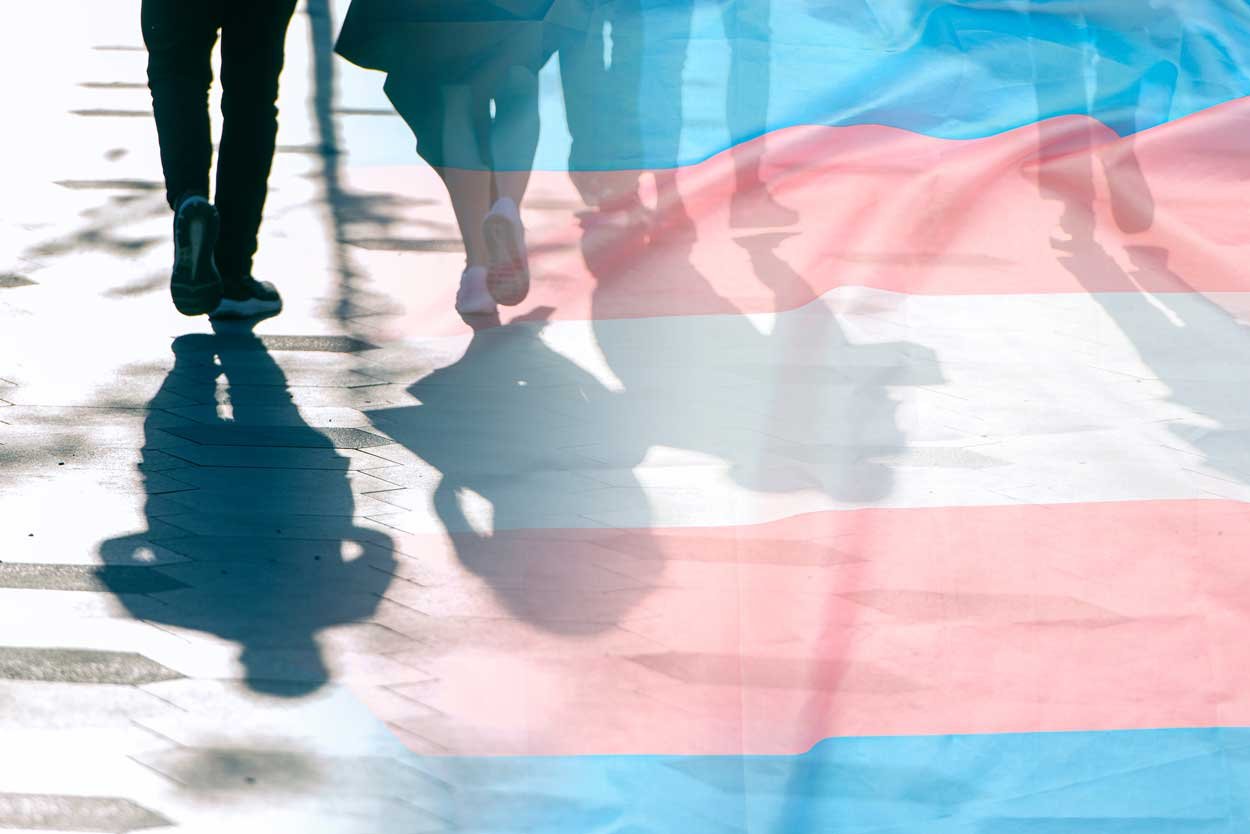
Research consistently finds that transgender youth experience significantly higher rates of bullying and victimization than their cisgender peers.
Bullying and Harassment
Most people understand that bullying is harmful.
What people sometimes underestimate is what happens when those experiences become part of everyday life.
Research consistently finds that transgender youth experience significantly higher rates of bullying and victimization than their cisgender peers.
For many, those experiences begin early and continue into adulthood.
Whether it happens at school, online, in the workplace, or in public spaces, repeated experiences of harassment send a message.
You are different.
You are unwelcome.
You are not safe here.
Over time, those messages can become internalized.
Many transgender people describe feeling like they are constantly assessing situations for safety. They think about whether a conversation will be uncomfortable before it even starts. They wonder whether someone will use the correct name or pronouns. They evaluate whether correcting someone feels worth the risk.
That kind of vigilance is exhausting.
Anyone would struggle under those conditions.

Feeling accepted and understood isn't a luxury. It's a basic psychological need.
Social Isolation
It's hard to feel hopeful when you feel alone.
And it's even harder when you feel alone in a way that people around you don't fully understand.
Many transgender people spend years wondering whether they will be accepted by friends, family members, employers, healthcare providers, or potential partners.
Some avoid social situations altogether because they fear rejection.
Others withdraw because they are tired of explaining themselves.
Some simply have not yet found a community where they feel understood.
Research consistently shows loneliness and social isolation are associated with increased risk for depression, self-harm, and suicidal thoughts.
Human beings are wired for connection. Feeling accepted and understood isn't a luxury. It's a basic psychological need.
When people feel disconnected from others, emotional pain often becomes harder to carry.

Many encounter healthcare providers who lack knowledge about transgender health.
Healthcare Barriers Facing Transgender People
Imagine finally working up the courage to ask for help, only to discover that the person sitting across from you knows very little about your experience.
Unfortunately, that is still a reality for many transgender people.
The 2022 U.S. Trans Survey found that nearly one-quarter of transgender respondents avoided needed medical care because they feared mistreatment, and about half of those who sought healthcare reported having a negative experience with a provider in the previous year.
It's hard to ask for help when you're not sure you'll be treated with dignity once you get there.
That's not just a healthcare problem. It's a trust problem.
Many encounter healthcare providers who lack knowledge about transgender health. Others have experienced discrimination, judgment, or dismissiveness in medical or mental health settings.
When someone has a negative experience seeking help, it can make it much harder to reach out again in the future.
Everyone deserves healthcare that feels safe, respectful, and affirming.
When people feel understood, they are more likely to seek help when they need it. When they don't, important opportunities for support can be missed.

In reality, trauma can also develop through repeated experiences of rejection, discrimination, bullying, and invalidation.
Chronic Invalidation
Sometimes emotional pain comes from major events.
Other times it comes from hundreds of small experiences that accumulate over time.
We often think of trauma as something that happens all at once.
In reality, trauma can also develop through repeated experiences of rejection, discrimination, bullying, and invalidation.
Sometimes it is not one devastating event that leaves a mark. It is the accumulation of hundreds of smaller experiences that communicate the same painful message over time.
Being told your identity isn't real.
Having your experiences questioned.
Being treated as though you need to justify your existence.
Correcting people over and over again.
None of these experiences may seem devastating in isolation.
But over time, they add up.
Many transgender people spend years receiving messages that who they are is somehow wrong, confusing, inappropriate, or less deserving of respect.
It is difficult to thrive when you are constantly being asked to defend your humanity.
The good news is that this is not the end of the story.
If rejection, isolation, discrimination, and invalidation can increase risk, what helps reduce it?
What helps people heal?

When transgender people feel accepted by their families, friends, partners, schools, workplaces, faith communities, or healthcare providers, their mental health tends to improve.
Protective Factors That Reduce Suicide Risk in Transgender People
When conversations about transgender mental health focus only on risk factors, it's easy to walk away feeling discouraged.
The reality is far more hopeful.
The same research that shows us what increases risk also shows us what helps protect against it.
And many of those protective factors are things that can be strengthened, built, and supported.
Acceptance Matters
If rejection hurts, acceptance helps.
That may sound obvious, but it's worth saying clearly.
When transgender people feel accepted by their families, friends, partners, schools, workplaces, faith communities, or healthcare providers, their mental health tends to improve.
Acceptance does not require perfection.
It doesn't require having all the answers.
More often, it looks like a willingness to learn, listen, and respect someone's identity even while you're still figuring things out.
Many people underestimate how powerful it can be to hear someone say:
"I believe you."
"I'm glad you're here."
"I love you."
Community Matters
There is something uniquely healing about not having to explain yourself.
Many transgender people spend years searching for spaces where they can fully relax.
Places where they do not have to educate everyone around them.
Places where they can simply exist.
Places where they don't have to be on guard all the time.
Whether that community is found through friends, support groups, LGBTQ+ organizations, online spaces, faith communities, or chosen family, connection can be incredibly protective.
Isolation tends to make emotional pain louder.
Connection tends to make it more bearable.
Gender-Affirming Care Matters
For many transgender people, access to gender-affirming care can have a meaningful impact on mental health and wellbeing.
Gender-affirming care looks different for different people.
For some, it may involve social changes such as using a different name or pronouns.
For others, it may include medical interventions.
For many, it includes working with healthcare providers who understand and respect their identity.
At its core, affirming care is about helping people live more authentically.
And it turns out that feeling seen, respected, and supported is good for mental health.
Mental Health Treatment Matters
Therapy cannot eliminate discrimination.
It cannot erase painful experiences.
It cannot guarantee that the world will always be accepting.
What it can do is help people navigate those realities more effectively.
Quality mental health treatment can help people process painful experiences, build coping skills, strengthen relationships, and create lives that feel meaningful even when circumstances are difficult.
Many transgender people come to therapy carrying years of rejection, shame, fear, or self-criticism.
Therapy can provide a space to put some of that weight down.

They need to know someone is willing to sit with them in their pain without immediately trying to explain it away or solve it.
How Loved Ones Can Support a Transgender Person Who Is Struggling
One of the most common questions people ask is: "What can I do to help?" The answer is often simpler than people expect.
Listen More Than You Talk
When someone is struggling, our instinct is often to fix the problem.
Most of the time, people do not need a perfect solution.
They need to feel understood.
They need to know someone is willing to sit with them in their pain without immediately trying to explain it away or solve it.
Listening may sound simple, but it can be one of the most powerful forms of support.
Respect Their Identity
Using someone's chosen name and pronouns is not just about language.
It's about respect.
It's about communicating:
"I see you."
"You don't have to convince me."
"You belong here."
People rarely remember whether someone used exactly the right words. They do remember whether they felt respected.
Don't Be Afraid to Ask
Many people worry that bringing up suicide will somehow put the idea into someone's head.
Research consistently shows that this is not the case.
Asking someone about suicidal thoughts does not increase risk. More often, it communicates that you are willing to talk openly about something difficult and important.
For many people, that conversation can be a relief.
If you're concerned about someone, it is okay to ask directly whether they are thinking about hurting themselves or ending their life. You do not need perfect wording. What matters most is creating space for an honest conversation and helping the person feel less alone.
Take Suicidal Thoughts Seriously
If someone tells you they are having suicidal thoughts, take them seriously.
You do not need to panic.
You do not need to have all the answers.
But you do need to respond.
Let them know you are glad they told you, stay with them if there is immediate concern for their safety, and help connect them with appropriate support.
Help Them Access Support
You do not have to do this alone.
Encouraging someone to connect with an affirming therapist, support group, healthcare provider, crisis resource, or trusted support person can make a meaningful difference.
Sometimes support looks like helping someone find a therapist.
Sometimes it looks like driving them to an appointment.
Sometimes it looks like sending a text that says:
"Thinking about you today."
Small actions matter more than people often realize.

What DBT can help with is the emotional pain that sometimes develops when someone has spent years dealing with rejection, invalidation, discrimination, trauma, or chronic stress.
How DBT Can Help Transgender People Struggling With Self-Harm and Suicidal Thoughts
First, it's important to clarify that Dialectical Behavior Therapy (DBT) does not treat gender identity because being transgender is not a mental health problem.
What DBT can help with is the emotional pain that sometimes develops when someone has spent years dealing with rejection, invalidation, discrimination, trauma, or chronic stress.
Most people who end up in DBT are not looking for a lesson on coping skills.
They're looking for relief.
They want the thoughts to quiet down.
They want to stop feeling like every emotion is a crisis.
They want relationships that don't feel so painful.
They want a life that feels worth sticking around for.
For people struggling with self-harm urges, suicidal thoughts, intense emotions, or the impact of chronic invalidation, those are exactly the kinds of challenges DBT was designed to address.
DBT was originally developed for people experiencing chronic suicidal thoughts, self-harm, and intense emotional suffering. Today, it is used to help people build skills for managing overwhelming emotions, navigating conflict, coping with distress, and creating lives that feel meaningful.
Many transgender people have spent years being told, directly or indirectly, that their experiences do not make sense.
One of the things DBT does particularly well is validation.
Validation does not mean agreeing with everything someone thinks or feels.
It means acknowledging that their emotional experiences make sense given what they have been through.
For people who have spent years feeling misunderstood, that can be incredibly powerful.

If you or someone you love is struggling with self-harm, suicidal thoughts, or overwhelming emotional distress, help is available.
When to Seek Help
If you or someone you love is struggling with self-harm, suicidal thoughts, or overwhelming emotional distress, help is available.
Warning signs may include:
Increasing isolation
Expressions of hopelessness
Escalating self-harm
Talking about wanting to die
Significant changes in mood
Increased substance use
Giving away possessions or saying goodbye to loved ones
Not everyone who is struggling will show obvious warning signs.
Sometimes people become very good at hiding their pain.
That is one reason why honest conversations about mental health matter so much.
If there is an immediate risk of harm, call 911, contact emergency services, or call or text 988 for the Suicide & Crisis Lifeline.
A Final Thought
If there's one thing I hope people take away from this article, it's that the higher rates of suicide and self-harm we see in transgender communities are not evidence that there is something wrong with transgender people.
They are evidence that rejection hurts.
Isolation hurts.
Bullying hurts.
Being told over and over that you are not welcome hurts.
The encouraging part is that the opposite is also true.
Acceptance helps.
Connection helps.
Community helps.
Feeling seen helps.
Feeling understood helps.
One of the most important things to remember is that struggling does not mean someone is broken, and needing support does not mean someone has failed.
When transgender people have access to acceptance, connection, affirming care, and effective support, they do not just survive.
They have the opportunity to build lives that feel meaningful, connected, authentic, and worth living.
Support matters. And for many people, it can make all the difference.
About our Guest Blogger:

Lauren Levy (she/they), LPC, NCC
Founder and Clinical Director of Anova Center for Therapy and Daisy + Co. Therapy
Lauren Levy (she/they), LPC, NCC, is the Founder and Clinical Director of Anova Center for Therapy and Daisy + Co. Therapy, Philadelphia-based mental health practices providing evidence-based care for adolescents and adults. Lauren specializes in Dialectical Behavior Therapy (DBT), trauma treatment, and working with individuals experiencing intense emotions, self-harm, suicidal thoughts, and other mental health challenges.
Lauren is queer and has extensive experience working with LGBTQ+ clients. Across both practices, many clinicians identify as queer, transgender, or gender nonconforming and are committed to providing affirming, evidence-based care. Lauren is passionate about helping people build their best, most authentic lives.