An Interview with Carly P.

Carly P. MMT (she/they)
Carly holds a Master’s degree in Ministry and Theology from Villanova University and is currently pursuing a Master of Science in Clinical Mental Health at Villanova.
They earned their Bachelor of Arts in Sociology, with concentrations in Leadership and Global Understanding, from La Salle University.
AT: The core wound: When an LGBTQ client comes to you carrying religious trauma, what does that wound most commonly look like — is it more about identity rejection, spiritual loss, community grief, or something else entirely?
CARLY: It is often about all of those things wrapped up in a person who is looking to find their way somewhere. Whether that’s back to a home they feel that they’ve lost, a new space where they can feel at home and reassurance that aspersions that have been made about them and their identity aren’t true. One of the most common wounds that I’ve come across is that people have been told (much like the rest of the queer community) that there is something fundamentally wrong with them, but with the added layer that it’s not just their community saying this but that god believes this too. And that someone has been told that they cannot be a person of faith and queer, when their faith is very important to them.

…someone has been told that they cannot be a person of faith and queer, when their faith is very important to them
AT: The reconciliation question: Many faith traditions actively affirm and celebrate LGBTQ identity — how do you help clients discover or reconnect with expressions of faith that align with who they are, and what does that journey toward spiritual wholeness tend to look like?
CARLY: It can look like a further exploration of what value those faith traditions hold for someone, and how that informs the way they see the world and walk through their lives. If we were to see them as two peoples, how might they get along and be in harmony with one another? Someone’s spiritual identity is very personal to them, and it looks different from person to person. You need to get to know that relationship like any other- by spending time in it.
Someone’s spiritual identity is very personal to them, and it looks different from person to person.
AT: The first session: What do you listen for in an initial session that tells you where a client is on their journey?
CARLY: I listen to their story. Where did they come from? Where are they now? Where might they want to go? If they’re not ready to give an answer that ties to a faith tradition, I want to know what values they hold and how they embody them. Also where faith plays or has previously played a role in their life and what they think of it now. How faith has brought vitality and or wounds to their personhood.

How has faith brought vitality and or wounds to your personhood?
AT: Internalized messaging: How do you help a client untangle their own voice from the religious messaging they've absorbed — especially when those messages feel like their own deeply held beliefs?
CARLY: By really sitting together and examining what is on their mind. Not to prove or disprove anything, but give them a space to think about where the message came from, how it does or doesn't align with how they see things and what they value. By mapping it out, they can see where thoughts and voices came from and where they are showing up now, and what that means for them moving forward. Also, if those voices and messages are positively or negatively impacting them.

By mapping it out, they can see where thoughts and voices came from and where they are showing up now
AT: When clients still want to stay in their faith: What does your therapeutic approach look like when someone wants to remain in a religious community that doesn't affirm their identity?
CARLY: [By] remembering that someone’s relationship with their religious or spiritual identity is sacred and very personal. I always encourage people to look at this relationship from a micro and macro lens, and to examine their own understanding of their community and faith tradition. But it always starts with curiosity and reflection. Let's look at what you know, and what you don’t know. Who taught you what you knew and how has that felt? Do you believe those things to be true? If not, what do you believe to be true? Where do you feel embraced and cast out? Also getting comfortable with the idea of “not knowing” everything. With big metaphysical concepts, it’s hard to “know everything” and just like everyone before us, we are understanding and interpreting as best as we can. Theologians have been debating and having discussions for centuries, if they can’t even settle on one answer, why would anyone else?
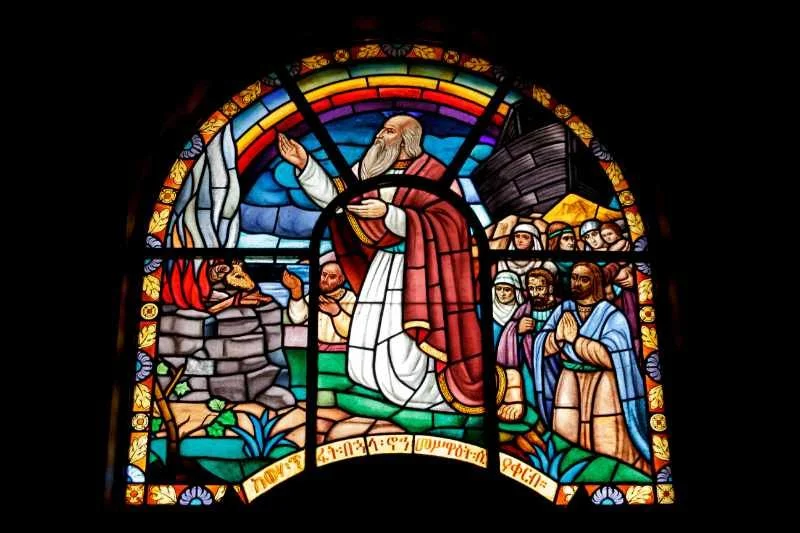
With big metaphysical concepts, it’s hard to “know everything”
AT: Spiritual grief: Religious trauma often involves mourning a God, a community, and a version of yourself all at once. How do you hold space for that kind of layered grief without rushing toward resolution?
CARLY: I would say that I hold the client as they move through the process of grief, and provide an additional perspective when it’s appropriate. In its simplest form it looks like providing a safe space where what they are feeling and thinking to be shared, and bringing attention to things that someone might not be able to see in the moment. Much like any grief process, the absence of something brings opportunities of reflection, recognition of what was once there, and an adjustment to life without it or finding ways to have needs met through other avenues. Also by reminding people that they are where they are, and that they don’t need to have to immediately have a solution.

In its simplest form it looks like providing a safe space
AT: The body: Shame from religious trauma is often stored physically — in how people carry themselves, how they relate to their bodies sexually, how they experience intimacy. How does that show up in your work?
CARLY: There is so much focus on that body in countless faith traditions. It shows up in so many ways, both physically and metaphorically. Much of it revolves around presence, action and norms/rules. This can show up as shame in the use of clients' bodies, or the question of how to inhabit one's body when they feel like they received the wrong one. It often brings up very fruitful and important discussions on even the perception of how to use the body and having to navigate how clients look at sex and intimacy- especially when the messages we receive early in life are widely heteronormative.
how to … navigate how clients look at sex and intimacy- especially when the messages we receive early in life are widely heteronormative
AT: Family systems: So much of religious identity is wrapped up in family belonging. How do you help clients navigate the fear that healing might cost them their family?
CARLY: This is always a tough question. First and foremost, acknowledging that their feelings of fear are real and valid. The steps beyond that widely depend on the client and what they want. The great thing about therapy is that it is confidential and safe for clients to explore, think and share without fear of that information going anywhere else. And I remind my clients of that. In this space they can be brave with me. If the client wants to talk it through, practice, write a letter, they can do that in a safe environment. It’s always very important to remind the client that they have at least one person who will be supportive of their healing journey as they navigate what their next steps are, and that their healing is important.
The great thing about therapy is that it is confidential and safe for clients to explore … without fear of that information going anywhere else.
AT: What folks might get wrong: Is there a misconception that LGBTQ clients with religious trauma commonly bring into therapy that you find yourself gently challenging again and again?
CARLY: I think the biggest misconception is that clients will be gently and repeatedly challenged in an unproductive way, and in a way that doesn’t respect their autonomy. Therapy inherently is a balance of support and gently challenging clients to get to where they’d like to be. The most common misconception that I think LGBTQ clients bring in is that because they are queer, they can’t participate in their faith community. Given the tumultuous relationships between faith traditions and the queer community, it makes sense that someone would think that. But it’s not always true. Another misconception surrounds identity salience, that they need to forsake or not embrace their religious identity for the sake of their queer identity. Both are identities that are part of them, and I often take time to discuss with clients why they feel that one “cancels the other out”
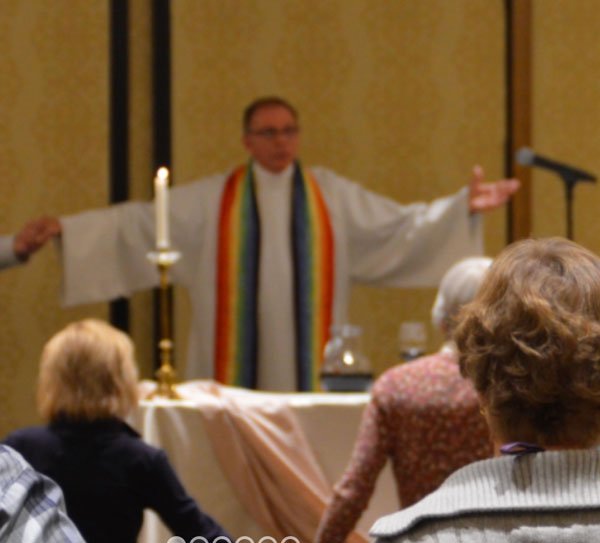
The most common misconception that I think LGBTQ clients bring in is that because they are queer, they can’t participate in their faith community.
AT: The turning point: What does it actually look like when a client starts to turn a corner — what shift do you see in them that tells you the real healing has begun?
CARLY: It widely depends on what the clients desires are. I would say in the broadest sense…it would be approaching and exploring what they are looking for with a little more peace than they walked in with. Approaching big questions and situations from a space of understanding and curiosity rather than negative emotions like fear or anxiety. There is a distinct heaviness that comes with tackling faith and it’s noticeable when that weight is a little lighter.