

The Intersection of LGBTQ Identity and Eating Disorders: Understanding the Deeper Roots
by Guest Blogger Dr. Amana Carvalho, Psy.D.,

Peer-reviewed research consistently demonstrates that LGBTQ individuals experience significantly higher rates of eating disorders than heterosexual and cisgender populations.
Eating disorders are often misunderstood as being about food, weight, or appearance. In reality, they are disorders of emotion regulation—deeply tied to how people cope with distress, identity conflict, and a need for control. When we examine eating disorder prevalence within LGBTQ communities, both lived experience and empirical research point to a clear conclusion: these disparities are real, measurable, and rooted in systemic and psychological stressors.
The Data: A Disproportionate Burden
Peer-reviewed research consistently demonstrates that LGBTQ individuals experience significantly higher rates of eating disorders than heterosexual and cisgender populations. Across large-scale national studies and comprehensive reviews, the findings are clear and consistent: LGBTQ individuals face elevated risk for anorexia, bulimia, binge eating disorder, and related disordered eating behaviors. These disparities are strongly associated with experiences of stigma, discrimination, and minority stress.
Please see Appendix for selected peer-reviewed research sources supporting these findings.

Religious trauma and internalized shame leads to beliefs that one’s body or identity is “wrong”
Why Eating Disorders Are More Prevalent in LGBTQ Communities
There is no inherent biological cause for this disparity. Rather, it is driven by Minority Stress—chronic exposure to stigma, discrimination, and identity-based invalidation.
Chronic experiences of rejection, conditional acceptance, bullying, and pressure to hide or suppress identity
Ongoing microaggressions and lack of positive LGBTQ representation contribute to feelings of invisibility and disconnection
Marginalization within LGBTQ spaces, including racism, ableism, and body-based or gendered shaming
Religious trauma and internalized shame leads to beliefs that one’s body or identity is “wrong”
Over time, these cumulative stressors create a persistent sense of instability, often leading individuals to shift control inward toward the body and eating behaviors.
Internalized Homophobia and Transphobia: The Body as a Battleground

As self-worth becomes increasingly tied to appearance and perceived social acceptability, the body may be treated as a site of conflict rather than care.
Internalized homophobia and transphobia occur when societal stigma is turned inward, leading people to absorb and believe harmful messages about their own identity. This process often disrupts the relationship with the body, which can begin to feel like something to control, minimize, alter, or even disconnect from entirely.
As self-worth becomes increasingly tied to appearance and perceived social acceptability, the body may be treated as a site of conflict rather than care. In this context, food and eating behaviors can take on a regulatory role, becoming tools to manage, numb, or cope with the distress associated with identity-based stigma.
Coping and Control: It’s Not About Food
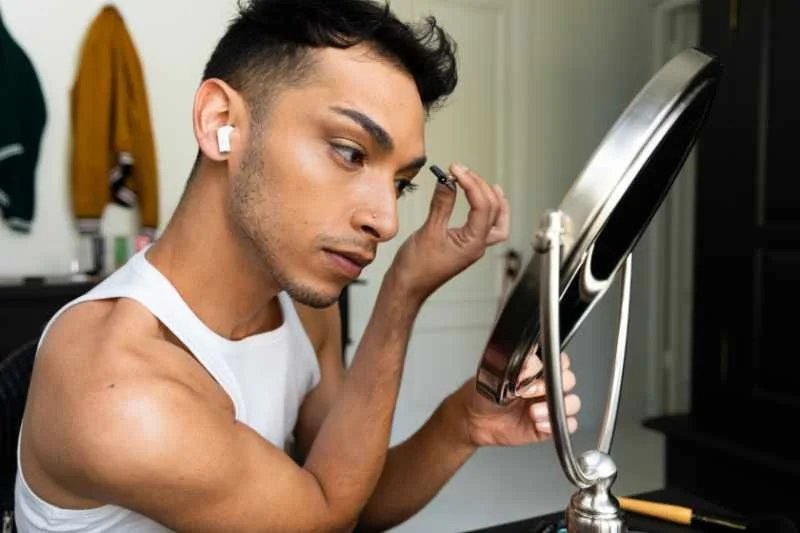
For many LGBTQ individuals, this drive for control is rooted in lived experiences such as family rejection, discrimination, threats to safety, and limited autonomy over identity and self-expression.
Eating disorders often function as coping strategies, particularly in the context of chronic stress and identity-based invalidation. While they may offer short-term relief, they tend to reinforce longer-term distress. Behaviors such as restriction, bingeing, or purging can serve to numb overwhelming emotions, regulate anxiety or trauma-related distress, and provide a sense of self-soothing when safe, affirming relationships are absent.
For many individuals, these patterns also reflect an attempt to reclaim a sense of control in environments that feel unpredictable or unsafe. Among transgender/non-binary-identified individuals, this can take on additional layers—restriction may be used to suppress physical development in pursuit of alignment or control, while binge eating may function as a way to alter appearance, such as gaining weight to move away from a gendered presentation that feels incongruent or unsafe.
For many LGBTQ individuals, this drive for control is rooted in lived experiences such as family rejection, discrimination, threats to safety, and limited autonomy over identity and self-expression. In broader sociopolitical climates that heighten uncertainty or vulnerability, reliance on these coping mechanisms may intensify. These behaviors are not random; rather, they are maladaptive yet meaningful responses to environments that feel invalidating, unsafe, or beyond one’s control.
Reclaiming Self: From Survival to Healing
What if this is you? What if your relationship with food and your body was never about failure, but about survival? What if the ways you’ve learned to cope were shaped by environments that asked you to hide, shrink, or change in order to be accepted?

You are allowed to exist as you are. You are allowed to take up space. You are allowed to define your identity on your own terms.
Healing Requires More Than Changing Behavior

Alternative emotion regulation tools might include practices like mindfulness, which involves paying attention to the present moment with openness and without judgment; grounding techniques, which help bring attention back to the here and now during moments of overwhelm (for example, by focusing on the senses or physical surroundings); and self-soothing strategies, which use comforting activities—such as listening to music, wrapping up in a blanket, or engaging in gentle routines—to create a sense of safety and calm in the body.
Recovery
Recovery involves more than altering eating patterns—it’s about transforming your relationship with yourself, your emotions, and your environment.
Strengthen your sense of identity so it is internally defined, not dictated by external expectations or stigma
Challenge internalized beliefs of “not good enough” and replace them with compassionate, self-affirming perspectives
Develop alternative emotion regulation tools to navigate distress without relying on food. These might include practices like mindfulness, which involves paying attention to the present moment with openness and without judgment; grounding techniques, which help bring attention back to the here and now during moments of overwhelm (for example, by focusing on the senses or physical surroundings); and self-soothing strategies, which use comforting activities—such as listening to music, wrapping up in a blanket, or engaging in gentle routines—to create a sense of safety and calm in the body.
Cultivate LGBTQ-affirming, supportive relationshipswhere diversity is celebrated and connection is safe.
Individual psychotherapy can support healing by helping you explore the roots of disordered eating, process trauma or invalidation, build emotional regulation skills, and foster self-compassion
Healing is possible—and you do not have to do it alone.
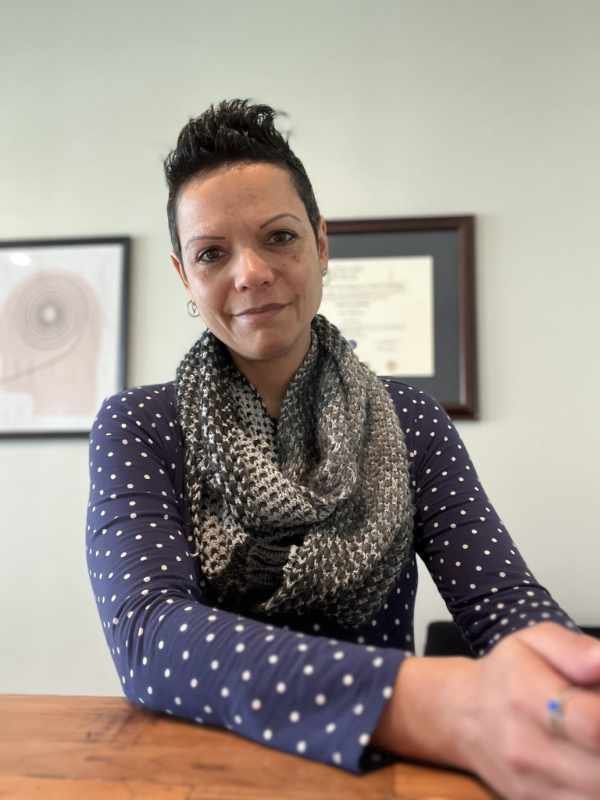
Guest Blogger: Dr. Amana Carvalho, Psy.D.,
Dr. Amana Carvalho, Psy.D., is a licensed psychologist who specializes in working with LGBTQ+ individuals navigating eating disorders, trauma, identity development, and relational challenges.
Her approach is warm, collaborative, and grounded in evidence-based therapies. Dr. Carvalho is committed to creating an affirming space where clients can move beyond survival patterns and toward a more authentic, empowered, and fulfilling life. She provides insurance-covered Individual TeleHealth-Psychotherapy in Pennsylvania and West Virginia. She is also available for self-pay treatment nationwide.
Appendix: Selected Research Sources
Calzo, J. P., Austin, S. B., & Micali, N. (2018). Sexual orientation disparities in eating disorder symptoms among U.S. adolescents and young adults. International Journal of Eating Disorders, 51(6), 556–562. https://doi.org/10.1002/eat.22827
Diemer, E. W., Grant, J. D., Munn-Chernoff, M. A., Patterson, D. A., & Duncan, A. E. (2015). Gender identity, sexual orientation, and eating-related pathology in a national sample of college students. Journal of Adolescent Health, 57(2), 144–149. https://doi.org/10.1016/j.jadohealth.2015.03.003
Feldman, M. B., & Meyer, I. H. (2017). Eating disorders in diverse lesbian, gay, and bisexual populations. International Journal of Eating Disorders, 50(8), 941–946. https://doi.org/10.1002/eat.22757
Nagata, J. M., Murray, S. B., Compte, E. J., Pak, E. H., Schauer, R., Flentje, A., Capriotti, M. R., & Lubensky, M. E. (2020). Community norms for the Eating Disorder Examination Questionnaire (EDE-Q) among transgender men and women. Eating Behaviors, 37, 101381. https://doi.org/10.1016/j.eatbeh.2020.101381
Parker, L. L., Harriger, J. A., & Beilharz, J. E. (2020). Disordered eating and body image concerns in sexual minority populations: A meta-analysis. Journal of Eating Disorders, 8(1), 1–17. https://doi.org/10.1186/s40337-020-00327-y
Watson, R. J., Adjei, J., Saewyc, E., Homma, Y., & Goodenow, C. (2017). Trends and disparities in disordered eating among heterosexual and sexual minority adolescents. International Journal of Eating Disorders, 50(1), 22–31. https://doi.org/10.1002/eat.22576
National Eating Disorders Association. (2023). Eating disorders in LGBTQ+ populations. https://www.nationaleatingdisorders.org
National Association of Anorexia Nervosa and Associated Disorders. (2023). Eating disorder statistics. https://anad.org