

Protecting Your LGBTQ+ Child: What Christian Parents Should Know About Conversion Therapy
If you are a Christian parent and your child has come out as LGBTQ+, you may feel torn between your faith and your love for your child. You may be asking hard questions about Scripture, identity, holiness, and what it means to be both truthful and compassionate.
That kind of struggle is real. It deserves patience, not panic.
Many Christian parents are told that conversion therapy is a loving or faithful response. It may be framed as a way to help a child return to God’s design or to prevent a difficult future. But whatever language is used, the practice is the same: an attempt to change or suppress a person’s sexual orientation or gender identity. And the evidence is clear that it causes harm.
For Christian families trying to respond with integrity, the most important thing to know is this: conversion therapy is not a faithful expression of love. Instead, conversion therapy creates shame, secrecy, and trauma.
What Conversion Therapy Teaches
Conversion therapy tells a child that if they try hard enough, pray hard enough, or submit enough, they can become someone else. Sometimes it is wrapped in religious language. Sometimes it is presented as counseling or discipleship. Sometimes it is introduced by people who truly believe they are helping.
But the result is usually the same: shame, fear, secrecy, and emotional damage.
A child who is told that their identity is unacceptable may begin to believe that God is disappointed in them or that love must be earned by change. That is not a small wound. It can shape a young person’s sense of self for years.

Parents may worry about their child’s spiritual life, safety, future, or relationship with the family.
Why Christian Parents Should Take the Harm Seriously
We know Christian parents are trying to do what they hope is best for their kid. Parents who consider conversion therapy are not acting out of cruelty. They are acting out of fear and they’ve been told this is how to help their child. They may worry about their child’s spiritual life, safety, future, or relationship with the family.
Those concerns are understandable. But fear is a dangerous guide.
Studies have linked conversion practices to depression, PTSD, anxiety, and suicidality. The American Psychological Association has said conversion therapy is ineffective and unethical. The UN has warned that in some cases these practices can amount to torture.
A method that increases despair cannot be justified as loving if it does direct harm.
What does your faith ask of you as a parent?
Those are important questions. But Scripture does not call parents to control their children and squash their self expression. It calls believers to love, mercy, humility, and gentleness.
A child should never be treated as a project to repair. They should be treated as a person to cherish. Even when parents have convictions about sexuality or gender, they should not resort to coercive programs that promise to “fix” what may not be broken in the first place.
Following your faith and parenting your child doesn't require cruelty. Conviction does not require abandonment.

A Christian response should never add shame to a child who is already vulnerable.
What do people say who have been through conversion therapy?
The stories of survivors should give every parent pause.
Mathew Shurka has described years of attempted change that led to lasting emotional harm. George wrote that conversion practices pushed him into self-harm and a suicide attempt. Kate McCobb said she was treated as if her attraction to women was a pathology, even though she had not asked to change it. Trevor Darling has spoken about the long-term pain of being sent to conversion therapy as a child.
These are not stories of spiritual renewal. They are stories of fear, shame, and injury.
A Christian response should never add shame to a child who is already vulnerable.

One of the greatest gifts a parent can give is safety.
How Christian Parents Can Respond Instead
If your child comes out to you, you do not need a perfect theology in order to begin with love.
That kind of response is not weakness. It is courage.
One of the greatest gifts a parent can give is safety. LGBTQ+ youth are more likely to thrive when they have supportive adults who make clear that they are not alone. Your child may not need you to agree with everything immediately. But they do need to know that they can come to you without fear.
Why This Is in the News Again
Conversion therapy is in the news again because of the Supreme Court’s 2026 ruling in Chiles v. Salazar, which struck down Colorado’s ban on the practice for minors. The ruling has drawn strong criticism from medical and LGBTQ+ organizations that warn it may weaken protections for children.politico+5
For Christian parents, this is a moment to ask not just what is legal, but what is loving, wise, and faithful.
A Better Christian Witness
A better Christian response begins with humility.
That kind of response reflects the character many Christians hope to embody: truth spoken in love, not in fear.
If you are a Christian parent, your child should see in you a witness to grace, not a source of shame. They should learn from your response that faith is big enough to handle hard questions and kind enough to protect the vulnerable.

Your child should see in you a witness to grace.
Faith is big enough to handle hard questions and kind enough to protect the vulnerable.
To Christian parents, faith leaders, and spiritual teachers:
You hold the power to reshape the narrative surrounding gender that you may have inherited. This doesn't require abandoning your faith texts—rather, it calls for deeper, more rigorous engagement with Scripture. You have the choice to recognize trans individuals as cherished by God, fashioned in the divine image, deserving of complete belonging, embraced and honored within your congregations.
You can raise your children with the knowledge that God crafted a wonderfully varied creation. You can welcome people across the spectrum of gender expression into your community spaces. You can turn away from the damage caused by restrictive teachings about "biblical masculinity" and "biblical femininity." You can hear the lived experiences of transgender people and honor their self-understanding.
As a Christian parent or faith leader, your calling isn't to reshape trans people or dispute their understanding of themselves. Instead, it's to offer them the radical, boundless compassion that Christ embodied, and to guide your spiritual community toward that same witness.

You can have confidence that God possesses the wisdom, compassion, and creative power to have intentionally brought transgender people into existence.
God's creation transcends binary categories. It's a spectrum—overflowing with hues, rich in diversity, magnificent in expression. Transgender individuals are woven into that beautiful tapestry. They merit recognition as the remarkable expressions of God's creative purpose that they truly are.
"For now we see only a reflection as in a mirror; then we shall see face to face. Now I know in part; then I shall know fully, even as I am fully known."
— 1 Corinthians 13:12
Conclusion
If your child comes out to you, you may feel uncertain about what it means for your family, your faith, or your future. Those feelings are real.
However, the evidence is clear that conversion therapy harms people. The stories are clear that it leaves many survivors carrying trauma for years. And for Christian parents, the call is not to force change through shame, but to love with truth, patience, and mercy.
Your child does not need to be fixed.
They need to be loved.
Read more of our writing on the intersection of Faith and LGBTQ identity:
God’s Design: Why Transgender People Reflect God’s Divine Creation
Why Conversion Therapy Is Harmful: What Parents Need to Know When Their Child Comes Out
Many Faiths, Many Identities: How World Religions Have Long Made Room for LGBTQ+ People
Resources

Fr. James Martin, a Jesuit priest wrote a book called Building A Bridge for Catholics looking for help with reconciling their faith with LGBTQ identities.
It has also been turned into a movie. Here is his introduction to the book.
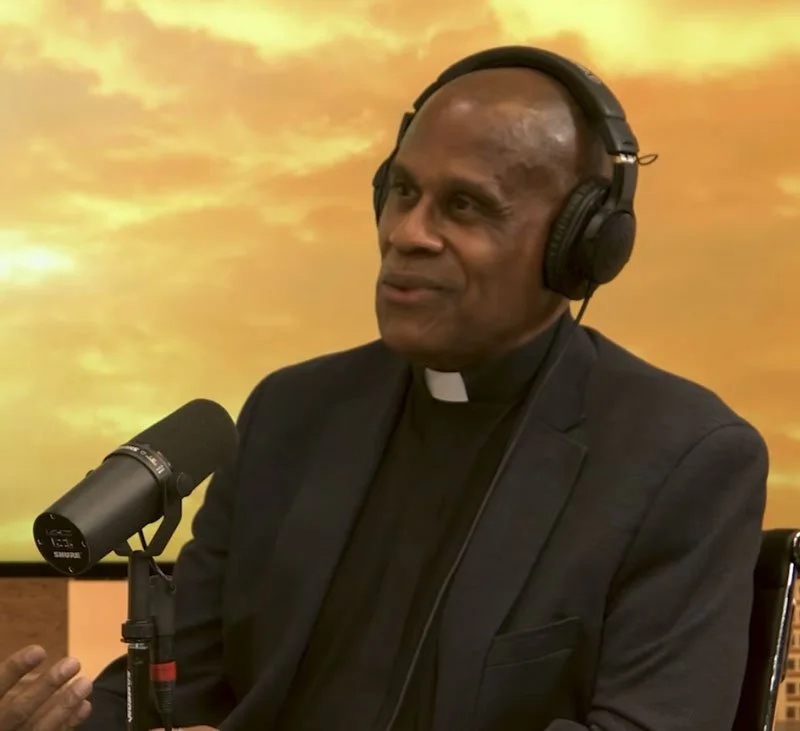
A Black, gay Catholic priest on living authentically | The Spiritual Life Podcast
Fr. Bryan Massingale is a Black, openly gay priest, but not, in his own words, “a hybrid car,” that can be segmented into identity categories. Instead, he’s compound reality, a mystery made by God’s grace.
Here is a link to a conversation between him and Fr. Martin.
Free blog that posts LGBTQ+ and faith positive content, and includes a scriptural resource page.
Citation list
Conversion therapy can amount to torture and should be banned, says UN expert
Conversion practices linked to depression, PTSD and suicide-related outcomes
The Trevor Project: Survivors of Conversion Therapy Tell Their Stories
The Trevor Project: New study finds conversion therapy harms and associated costs
American Psychological Association: Position Statement on Conversion Therapy and LGBTQ+ Patients
American Psychological Association statement on the Supreme Court decision in Chiles v. Salazar
JAMA Pediatrics: Humanistic and Economic Burden of Conversion Therapy Among LGBTQ Youth
Supreme Court sides with therapist in challenge to Colorado’s ban on conversion therapy
NPR: The Supreme Court struck down a ban on conversion therapy in Colorado