

Many Faiths, Many Identities: How World Religions Have Long Made Room for LGBTQ+ People
By Arrive Therapy
TL;DR
Many of the world's oldest spiritual traditions — Islam, Hinduism, Buddhism, Judaism, Indigenous traditions, Quakerism, Unitarian Universalism, and Sikhism — have long histories of recognizing, honoring, and even celebrating gender diversity and same-sex love.
For LGBTQ+ people navigating the painful intersection of faith and identity, this history matters. You were not an afterthought. You were never meant to be excluded.
At Arrive Therapy, clinicians Shayne P, Liv E. and Carly P. specialize in supporting LGBTQ+ folks through religious trauma and spiritual healing — because you deserve support from someone who gets it.
For many LGBTQ+ people, the intersection of faith and identity can feel like standing at a crossroads — pulled in opposite directions, told by one community that you must choose. But what if the story you've been told about religion and queerness is incomplete? What if some of the world's oldest spiritual traditions have, for centuries, held space for gender diversity, same-sex love, and fluid identity — long before those ideas entered modern conversation?
The truth is, many faiths do. And for those navigating the complicated terrain where sexuality, gender, and spirituality meet, that knowledge can be genuinely healing.
At Arrive Therapy, we are committed to supporting LGBTQ+ folks in exploring spiritual terrain — on their own terms.
Three of our clinicians specialize specifically in this intersection of identity and faith:
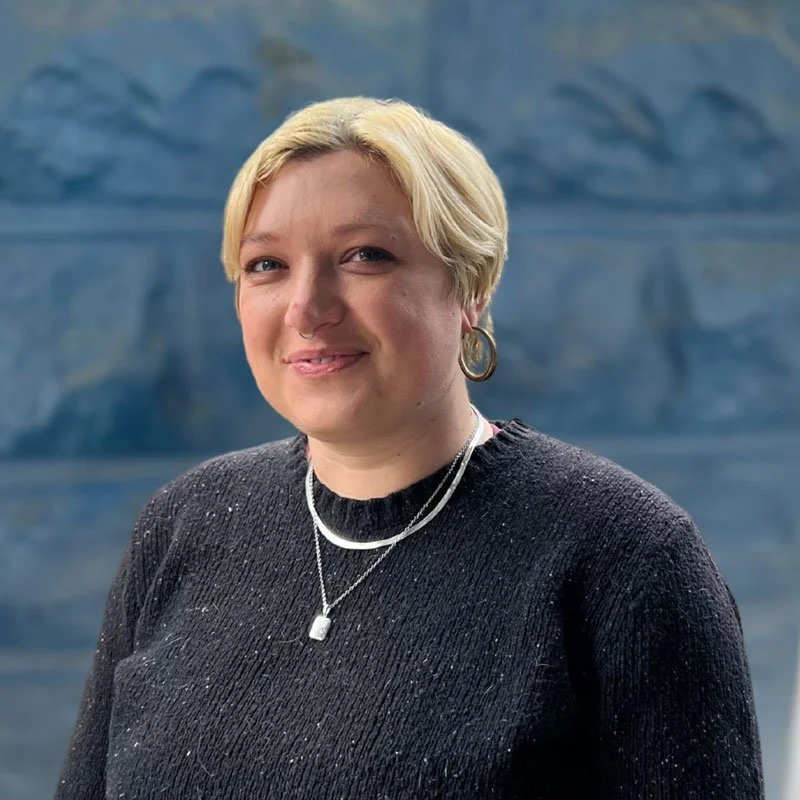
Liv E. (they/she)
Master’s in Social Work: Boston College
EMDR Certified
Liv E. (they/she) holds an MSW from Boston College and is certified in EMDR. As a queer, nonbinary person, Liv brings not only clinical training but lived experience to their work with clients navigating trauma, religious wounding, grief, and questions of gender and sexuality. Liv understands — personally and professionally — what it means to hold complexity.

Carly P. (she/they)
MA in Ministry and Theology, Villanova University
Obtaining MS in Clinical Mental Health, Villanova University
B.A., Sociology and Leadership & Global Understanding, La Salle University
Carly P. (she/they) brings a rare background in sociology, theology, and counseling, making her uniquely equipped to sit with clients at the crossroads of faith and queerness. Carly works with LGBTQ+ individuals who are processing religious trauma, exploring their spiritual path, or seeking to understand how their race, ethnicity, sexual orientation, and religious identity weave together. Her approach is collaborative and empowering — she's there to help clients discover and harness their own power.
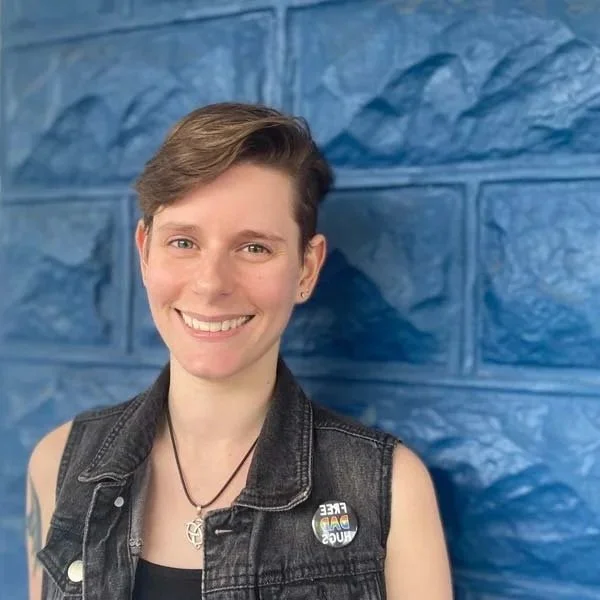
Shayne P., MA (any/all)
M.S., Clinical Counseling Psychology, Chestnut Hill College
B.S., Psychology, Wilmington University
Reiki Master Teacher
Therapeutic Game Master
As a genderfluid and queer therapist, Shayne draws on their lived experience when working with gender expansive and questioning individuals. She works with thoughtful, often anxious adults who are drawn to depth-oriented therapy. Many are interested in self-exploration and understanding their emotional and relational patterns, and are looking for therapy that goes beyond the surface. Shayne’s hope is to be a guiding light as you discover who you truly are and where you want to go.
Now, let's take a journey through some of the world's major faith traditions — and explore what they've always had to say about the full spectrum of human identity.
Islam:
A Tradition With More Nuance Than You've Heard
Western discourse often portrays Islam as uniformly hostile to LGBTQ+ identities. But Islamic scholarship — particularly among progressive and reform-minded thinkers — tells a far more layered story.
Scholar Scott Siraj al-Haqq Kugle's landmark book,Homosexuality in Islam: Critical Reflection on Gay, Lesbian, and Transgender Muslims, argues that centuries of translation errors and cultural overlays have shaped an interpretation of the Qur'an that condemns homosexuality — when a closer reading suggests the Lot narrative is actually about lust, inhospitality, and coercion, not same-sex love between consenting adults. Kugle's work has become foundational for LGBTQ+ Muslims seeking to reconcile their faith with their identity.
Muslims for Progressive Values, a grassroots faith organization operating in the US and Malaysia, centers Islamic justice and equality as its core mission — and explicitly affirms LGBTQ+ Muslims. The Mecca Institute, an inclusive online Islamic seminary, offers theological grounding for queer Muslims. Affirming mosques, like the Ibn Ruschd-Goethe mosque in Berlin where men and women pray together and LGBTQ+ worshippers are welcomed, are growing around the world.
For LGBTQ+ Muslims, the journey is real and often difficult — but a growing community of scholars, imams, and believers are insisting that Islam has room for them too.
Learn more:
Hinduism & the Vedic Tradition:
The Third Sex Has Always Existed
Of all the world's major religious traditions, Hinduism may have the most ancient and explicit acknowledgment of gender diversity. In Vedic literature — texts dating back to 1500–500 BCE — human sexuality was understood as falling into three distinct categories: pums-prakriti (male), stri-prakriti (female), and tritiya-prakriti — the third nature, or third sex.
Tritiya-prakriti encompassed what we would today recognize as gay men, lesbians, transgender individuals, intersex people, and those of non-binary gender. Amara Das Wilhelm's comprehensive text, Tritiya-Prakriti: People of the Third Sex, draws directly from the Kama Sutra, the Mahabharata, and the Puranas to show that third-sex people were not hidden or shamed — they were integrated into society, their presence at births and weddings considered auspicious.
The Mahabharata includes the transgender character Shikhandi. The warrior Arjuna cross-dresses as Brihannala. The hijra community — third-gender people with deep ties to the goddess Bahuchara Mata — have performed sacred roles in Hindu ritual for millennia. As Harvard Divinity School documents, it was British colonialism, not Hindu tradition, that criminalized these identities. The Hindu American Foundation and Hindus for Human Rights have both published statements explicitly affirming that Hindu teachings are inclusive of LGBTQ+ people.
The tradition was never the problem — colonization was.
Learn more:
Tritiya-Prakriti: People of the Third Sex by Amara Das Wilhelm (Internet Archive — free)
Hindu Teachings Inclusive of LGBT People — Hindu American Foundation
Gender and Sexuality in Hinduism: Embracing Fluidity and Diversity — Hindus for Human Rights
Tritiya-Prakriti: The Hidden Third Gender in Hinduism — PinkNews
Buddhism:
Compassion Has No Exceptions
Buddhism, at its philosophical core, offers some of the most naturally LGBTQ+-affirming ground of any world religion. The Buddha never addressed sexual orientation in the Pali Canon, and the ethical framework of Buddhism centers not on the gender of one's partner but on the quality of one's intentions — whether acts are rooted in love, mutual consent, and care.
The beloved Thiền Buddhist master Thích Nhất Hạnh put it simply: "If you are born gay or lesbian, your ground of being is the same as mine." His community, Plum Village, is explicitly LGBTQ+-affirming, as are many sanghas worldwide. Theravada monk Shine Waradhammo has stated directly: "Treating LGBT people badly goes against the Buddha's teachings."
A peer-reviewed study titled "Being Different with Dignity: Buddhist Inclusiveness of Homosexuality" makes the scholarly case for Buddhism's inherent openness. Rainbodhi, an LGBTQIA+ Buddhist community, exists specifically to support queer practitioners.
And a Pew Research poll found that 88% of American Buddhists support acceptance of homosexuality — the highest rate of any religious group studied.
Learn more:
Judaism:
A Long History of Evolving Compassion
Jewish tradition is not monolithic — it is a living, debated, evolving conversation. And within that conversation, especially in the Reform and Conservative movements, LGBTQ+ inclusion has become a clear and committed value.
Reform Judaism has been affirming LGBTQ+ people since 1996, when the Central Conference of American Rabbis passed resolutions in support of same-sex civil marriage. Today, Reform congregations ordain transgender rabbis, celebrate same-sex marriages, and explicitly prohibit discrimination based on sexual orientation or gender identity. The Religious Action Center of Reform Judaism actively advocates for LGBTQ+ civil rights at the national level.
The Conservative movement followed a more gradual path, but since 2006 has ordained openly LGBTQ+ rabbis. In 2016, the Rabbinical Assembly passed a historic resolution affirming full welcome and inclusion for people of all gender identities. Conservative Judaism now recognizes and celebrates same-sex marriages.
Learn more:
Indigenous Traditions:
The Gift of Two Spirits
Long before Western frameworks for gender and sexuality existed, Indigenous peoples across North America recognized — and honored — gender diversity. The term Two-Spirit, coined in 1990 by Fisher River Cree Elder Myra Laramee, is a modern pan-Native term that encompasses the many tribal-specific identities that have existed for thousands of years across more than 150 pre-colonial nations.
Two-Spirit people — individuals who carry both masculine and feminine spiritual energies — were not merely tolerated. They were considered gifted. In many communities they served as healers, medicine people, and visionaries. Two-Spirit status was recognized and confirmed by tribal elders within ceremonial contexts; it was a sacred role, not simply an identity label.
Specific nations had their own terms and understandings: the Navajo recognized at least six genders; the Lakota used the word winkte; the Blackfoot recognized ninauh-oskitsi-pahpyaki, "manly-hearted woman." It was colonization — enforced through missionaries, boarding schools, and the 1871 Criminal Tribes Act — that suppressed these traditions. Today, Two-Spirit people are reclaiming their heritage and restoring what was taken.
Learn more:

Quakers:
The First Religion to Put It in Writing
The Religious Society of Friends — Quakers — holds a quiet but radical distinction: in 1963, they published Towards a Quaker View of Sex, the first religious document in history to positively affirm same-sex relationships. Its central teaching: "It is the nature and quality of a relationship that matters… The same criteria seem to us to apply whether a relationship is heterosexual or homosexual."
Quakers have been walking that talk ever since. In 2009, Quakers in Britain became the first religious organization in the UK to formally recognize same-sex marriage. The Friends General Conference in the US has long welcomed openly LGBTQ+ members and celebrated same-sex unions. The central Quaker principle — the belief in "that of God in every person" — extends, for most Friends, without exception.
The decentralized nature of Quakerism means some meetings are more conservative than others. But the liberal tradition of Friends stands as one of the longest-running, most theologically grounded advocates for LGBTQ+ inclusion in religious history.
Learn more:
Unitarian Universalism:
Fully Affirming Since 1970
If there is a spiritual home designed from the ground up to welcome LGBTQ+ people, it may be Unitarian Universalism. In 1970, the Unitarian Universalist Association (UUA) became the first religion in America to officially condemn discrimination against gay and lesbian people. Since 1984, UU clergy have been officially supported in officiating same-sex unions.
The theological foundation is simple and radical: the first of the UUA's seven principles affirms "the inherent worth and dignity of every person." That means everyone. LGBTQ+ belonging, safety, and liberation are core to the tradition's identity — not an add-on, not a recent update.
Today, more than 80% of US UU congregations have formally become Welcoming Congregations — a designation that involves active education and commitment to LGBTQ+ inclusion. LGBTQ+ people are ordained as ministers, celebrated as leaders, and affirmed as full participants in every aspect of religious life. For those who have experienced religious trauma and wonder if spiritual community is even possible anymore, Unitarian Universalism has intentionally built a door that is always open.
Learn more:
Sikhism:
A Philosophy of Oneness
Sikhism presents a compelling case worth exploring: the Guru Granth Sahib — the Sikh holy scripture — contains no explicit condemnation of homosexuality. In fact, it contains no explicit mention of sexual orientation at all. For many scholars and Sikh LGBTQ+ advocates, this silence is meaningful.
Guru Nanak's foundational teaching is radical equality — the oneness of all human beings regardless of caste, gender, or background. The universal Sikh aspiration is to have "no hate or animosity to any person." The four verses of the Lavaan, the Sikh marriage ceremony, are notably non-gender-specific in their language of devotion.
Advocates within the Sikh community argue that the philosophy of oneness, tolerance, and dignity that runs through Gurbani naturally extends to LGBTQ+ individuals. The tension that exists often comes not from scripture but from Punjabi cultural conservatism — a distinction that many modern Sikh voices are actively naming and working to change. The conversation within Sikhism is ongoing and alive, which itself reflects the tradition's commitment to continual reflection and growth.
Learn more:
You Don't Have to Choose Between Faith and Yourself
If reading this stirred something in you — relief, grief, hope, or questions you've carried for a long time — you're not alone. For many LGBTQ+ people, the path toward spiritual healing is also a path toward self-acceptance. Those journeys deserve to be witnessed by someone who understands both.
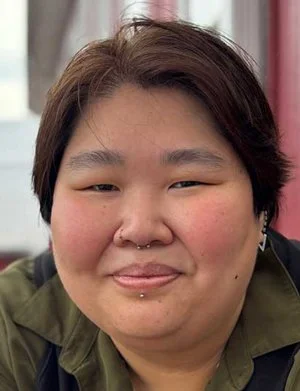
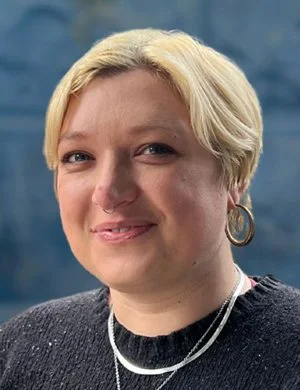
Liv E. and Carly P. at Arrive Therapy are here for exactly that. Whether you're working through religious trauma, reconnecting with a faith tradition on your own terms, or simply trying to understand how all the parts of you fit together — there is space for you here.
Arrive Therapy serves clients in PA, NJ and NY. Learn more about our team at arrivetherapy.com.
Read more of our writing on the intersection of religion and LGBTQ identities:
God’s Design: Why Transgender People Reflect God’s Divine Creation
Why Conversion Therapy Is Harmful: What Parents Need to Know When Their Child Comes Out
Protecting Your LGBTQ+ Child: What Christian Parents Should Know About Conversion Therapy